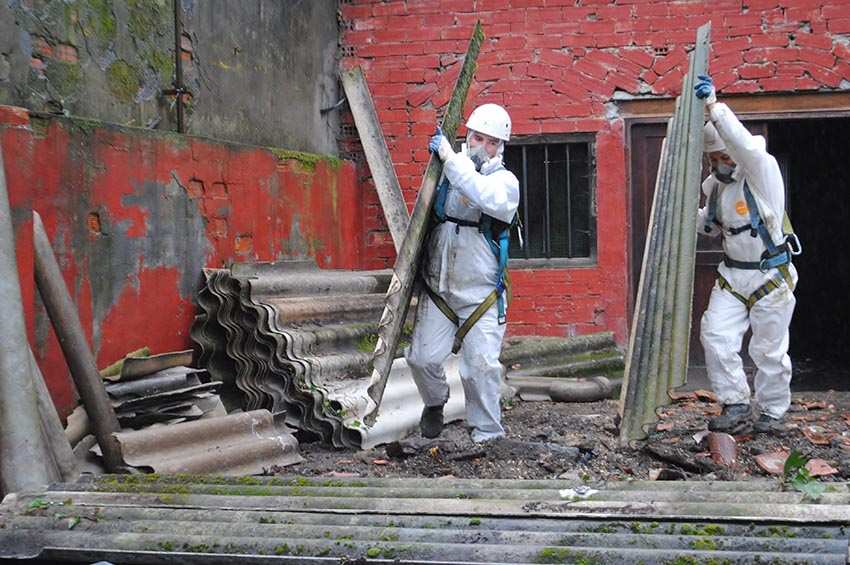
Asbestos was a widely used construction material in roofing for its strength, insulation and fire resistance, but because of the long-term health risks that occur when exposed to it, it needs to be removed by specialists in a controlled process.
The legacy of asbestos and the exceptional and incurable harm it can cause has led people to justifiably ask why it was ever used as a roofing material at all, let alone at the global scale that it was.
Its proliferation means that whilst it has been banned for over 25 years, it has been used so often and in so many materials that many older buildings and roofs could contain the material, although in most cases it is safer to keep the asbestos in place than risk potential disruption.
Why was it used so much? Why is it so dangerous? And when does it need to be removed?
Why Was Asbestos Used So Much?
Whilst known about since ancient history and linked to the myth of the samandar or salamander, asbestos began to be used in industrial quantities by the late 19th century as an almost wonder material.
It was lighter, stronger, longer-lasting, cheaper and more resistant to fire and chemical breakdown than anything else on the market that had come before, and even compares well to many common roofing materials that have been made since.
This, in combination with its sheer versatility as a material, meant that it was used in pretty much everything from brake pads and plaster to gas mask filters and theatrical safety curtains.
It was everywhere, until it became clear that the material was dangerous in ways that could no longer be denied or ignored.
Why Is Asbestos Dangerous?
Whilst undisturbed, in situ and deep in the fabric of your building, asbestos is harmless, and this, in combination with the slow-acting nature of the diseases asbestos causes, meant that it took a long time for the dangers of the mineral to be truly known.
Asbestos is safe as long as it remains sturdy and stable, but if it breaks, it releases millions of little fibrous strands that are easily breathed in and can cause irreversible damage to your lungs.
This manifests as one of two main health conditions, both of which are incurable:
- Asbestosis – A lung condition where asbestos fibres permanently damage and scar the lungs, causing fatigue, coughing, wheezing and shortness of breath
- Mesothelioma – A rare form of cancer where asbestos damages the mesothelium lining of the organs, most commonly the lung or abdomen.
It can also cause lung cancer, ovarian cancer and cancer of the larynx.
These conditions can often take decades to manifest, but the long-term harm they cause and how they inherently shorten lifespans means that the material has been banned since 2000, and any building with it needs to be carefully monitored in case the asbestos is disturbed by age.
When Does Asbestos Need To Be Removed?
If your asbestos roofing materials are in sound condition, have been labelled and are regularly inspected, they may not need removing.
However, if they are likely to be disturbed (such as roofing tiles exposed to storms), cannot be reliably managed, or you plan on undertaking roofing works, they may need to be removed first to keep you and anyone working on the roof safe.